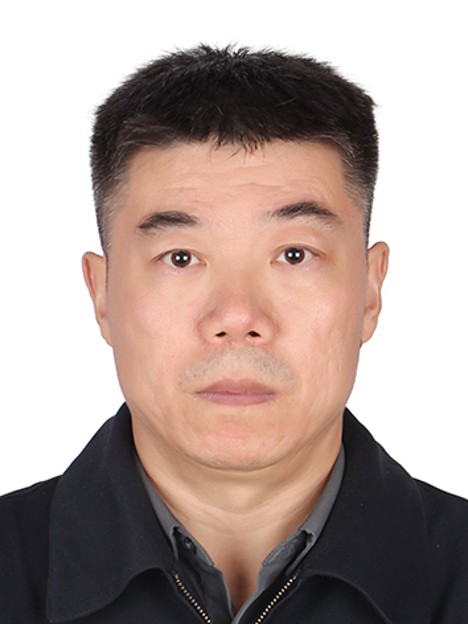
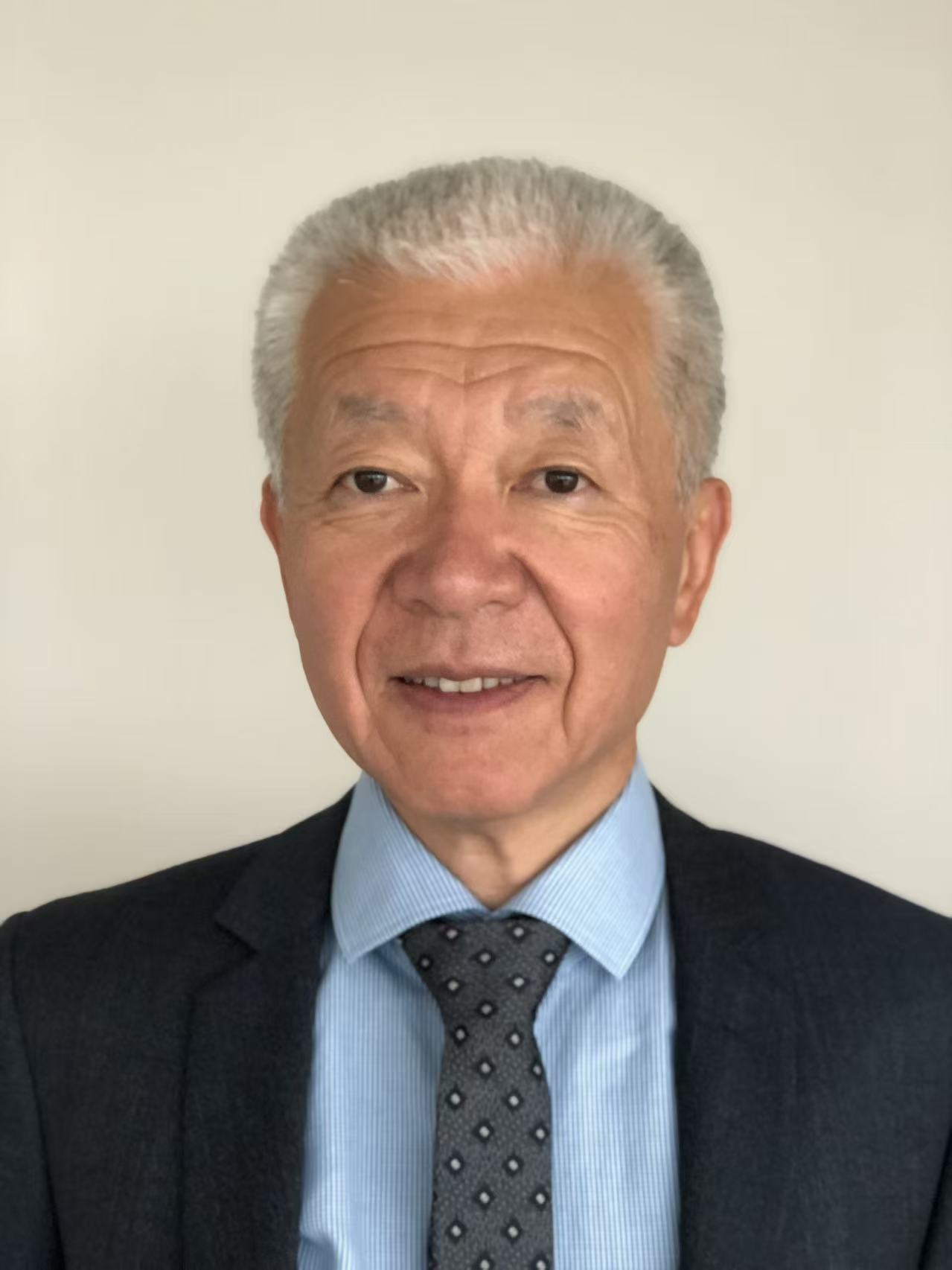
 | Prof. Yicheng Zhang (Member of Academia Europaea)Swiss Center for Data and Network Science, Switzerland Prof. Yi-Cheng Zhang is a Member of Academia Europaea and the Founding Director of the Swiss Center for Big Data and Network Science. His long-standing research lies at the intersection of complex systems, network science, big data, artificial intelligence, and biomedicine. His work covers complex network modeling, collective intelligence, information diffusion, recommender systems, health data analytics, and theories of next-generation personal assistants. He has published more than 200 papers in leading international journals and has received over 30,000 citations, reflecting his broad academic influence in interdisciplinary research. Title: From Complexity Science to Artificial Intelligence: The Era of Personal Assistants Abstract: This presentation will discuss the transition from complexity science to artificial intelligence, with a focus on the emerging era of personal assistants. Starting from the background and evolution of complexity science and network science, it will consider how complex systems thinking can help us understand the development of contemporary AI. The presentation will also touch on the relationship between AI, data, algorithms, sensing technologies, and platform connectivity, while keeping attention on broader conceptual questions rather than specific technical solutions. In particular, it will offer preliminary reflections on how personal assistants may reshape the ways individuals interact with information, services, health systems, and society. Key issues such as trust, privacy, data use, safety, governance, and human-AI collaboration will be considered as open questions for further discussion, especially in the context of intelligent medicine. |
 | Prof. Hongxing QinChongqing University, China Hongxing Qin is now a professor and doctor supervisor in Chongqing University. He earned his PhD from Shanghai Jiaotong University in 2008. From 2008 to 2009, he worked as postdoctoral research at Rutgers, The State University of New Jersey, USA. His research focuses on computer graphics, 3D vision, visualization and visual analytics. He authored over 50 papers in international journals including ACM TOG, IEEE TVCG and CGF. Title: Medical Hair Modeling Based on Gaussian Splatting Abstract: Quantitative analysis of hair conditions in patients with alopecia areata to provide foundational models and data for relevant computer-aided medical treatment is critical to realizing objective evaluation of disease severity and automated efficacy detection for alopecia areata. This report introduces a head and hair modeling framework based on Gaussian Splatting with video data as input, laying a digital foundation for the treatment of alopecia areata. |
| Prof. Weishan ZhangChina University of Petroleum (East China), China Outstanding Talent of Qingdao City, Outstanding Talent of West Coast New Area, Deputy Director of the Federal Data and Federal Intelligence Special Committee of the Chinese Association of Automation, Deputy Director of the Blockchain Special Committee of the Chinese Association of Automation, Director of the Shandong Province Trustworthy Artificial Intelligence Ecosystem Laboratory, and President of the Qingdao Artificial Intelligence Society. Selected for the "Lifetime Scientific Impact" list of the world's top 2% of scientists. More than 200 papers have been published. Currently, the H-index is 32 and the i10 index is 106. 18 invention patents have been authorized. He/She has presided over major basic research projects of the National Natural Science Foundation of China and the Natural Science Foundation of Shandong Province, etc. Title: Fair-FedMOE: Group-Fair One-Shot Federated Learning via Prototype-Guided Experts for Medical Imaging Analysis Abstract: Group fairness can ensure equitable performance across different demographic subgroups for medical image analysis. However, the current fine-tuned foundation models (FMs) exhibit significant subgroup disparity. One-shot federated learning (OFL) can potentially mitigate this by leveraging cross-institutional data diversity within a single communication round. However, heterogeneous distributions across medical institutions may cause OFL local models to diverge severely, resulting in parameter conflicts that amplify disparity upon aggregation. To address these challenges, we propose Fair-FedMOE, a group-fair OFL framework for medical FMs. During local training, Fairness-aware Expert Routing leverages learnable prototypes to route samples to group-specific experts, enabling subgroup-specialized learning to capture group-specific features without inter-group interference. During model aggregation, Prototype-guided Differential Aggregation computes personalized weights based on prototype similarity and applies differentiated aggregation strategies to filter conflicting updates. We propose RES-AUC, a Rawlsian justice-inspired metric based on worst-group performance that remains stable as groups increase. Extensive experiments on retinal and chest X-ray datasets with multiple FMs demonstrate consistent fairness gains without sacrificing accuracy. |
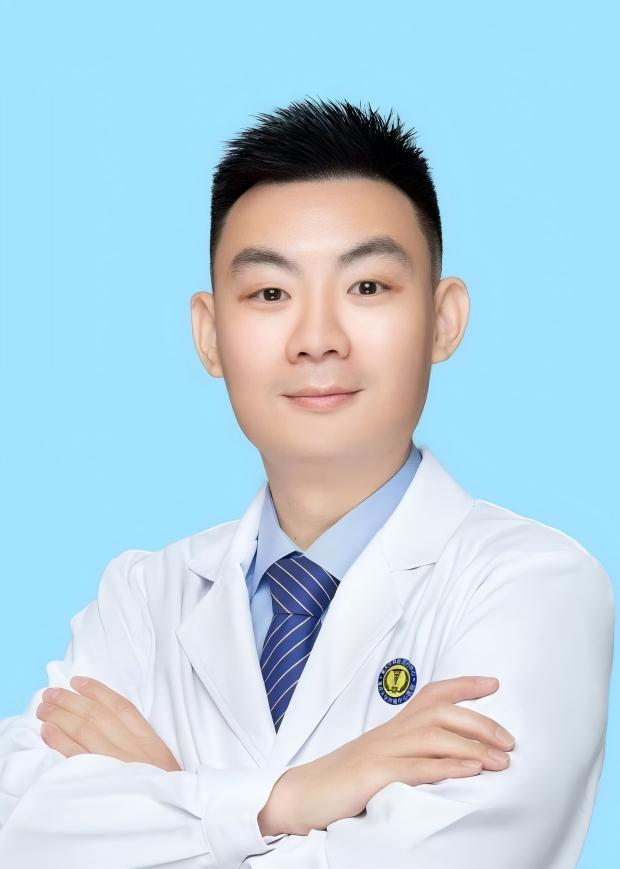 | Prof. Chang LiChongqing University, China Chongqing Talent, High-Level Talent of Yuzhong District, Doctor of Medicine, Postdoctoral Fellow in Biomedical Engineering at Chongqing University, Associate Chief Physician, Master’s Thesis Supervisor at the School of Medicine, Chongqing University, and Head of the Interventional Group, Department of Medical Imaging, the Affiliated Central Hospital of Chongqing University. Expert of Chongqing Science and Technology Expert Database, Expert of Chongqing Medical Equipment Centralized Procurement Expert Database, Member of the European Society of Radiology (ESR), Member of the International Society for Magnetic Resonance in Medicine (ISMRM), Deputy Leader of the Minimally Invasive and Noninvasive Medical Imaging Group of Chongqing Medical Doctor Association, Member of the Interventional Radiology Committee of China Maternal and Child Health Association, Member of the Interventional Therapy Special Committee of Chongqing Association of Integrated Traditional and Western Medicine, Member of the Tumor Intervention and Minimally Invasive Special Committee of Chongqing Association of Integrated Traditional and Western Medicine, Member of the Medical Imaging Special Committee of Chongqing Association of Integrated Traditional and Western Medicine, and Member of the Interventional Group, Radiology Branch of Chongqing Medical Association. Title: Artificial Intelligence-Enabled Multimodal MRI Radiomics in the Study of Cognitive Impairment in Type 2 Diabetes Mellitus Abstract: Objective: To elucidate the mechanisms of brain structural impairment in type 2 diabetes mellitus (T2DM)-related mild cognitive impairment (MCI), identify pathophysiological imaging biomarkers, and construct an artificial intelligence (AI)-based early diagnostic model for T2DM-associated MCI as well as a risk assessment framework for the conversion from MCI to Alzheimer's disease (AD). Methods: A case-control study design was employed with multiple groups of participants matched for demographic characteristics. Multimodal datasets were integrated, including high-resolution structural MRI, diffusion tensor imaging (DTI), neuropsychological test scores, clinical biochemical indices, and cerebrospinal fluid (CSF) biomarkers. Systematic analyses were performed via FreeSurfer-based image segmentation, graph-theoretic network analysis, AI modeling, causal inference, and nomogram development. Results: T2DM-related MCI was characterized by specific gray matter atrophy, selective white matter volume loss, and topological reorganization of brain structural networks. White matter imaging biomarkers with robust diagnostic performance were identified. The multimodal fusion AI diagnostic model achieved an area under the receiver operating characteristic curve (AUC) of 0.887. A cascade pathogenic pathway mediated by apolipoprotein E ε4 (APOE4) was verified, which drives amyloid-β (Aβ) deposition, tau hyperphosphorylation, and subsequent brain structural degeneration. The combined prediction model for MCI-to-AD conversion yielded an AUC of 0.918. Conclusion: This study delineates the neuroimaging pathological mechanisms underlying multidimensional brain structural damage in T2DM-related cognitive impairment. The established multimodal AI diagnostic model and AD conversion risk assessment system provide objective evidence and technical support for early screening, precise risk stratification, and intervention target discovery for diabetic cognitive disorders. |